Tabi basa & greetings everyone. When it comes to Gawai, many would only know 1st of June, which is called Gawai Dayak.
But did you know, there are many types of Gawai. To honour the past, I’d like to share about Gawai Baak, which literally means “celebration of head” in Bidayuh.
Gawai Baak is held in honour of the skulls that was obtained by the warriors in the battle between villages in one of their headhunting expedition, where they are placed at the baruk / balû (main hall).
In the past before James Brooke’s arrival, headhunting is a common practice. There was a lot of tribal wars. Back then, the warrior’s social status depends on the number of head that they obtain in battle. The strongest would be their leader.
During his reign, headhunting (ngayu in Bidayuh /ngayau in Iban) is prohibited. But the practice of appeasing skull inherited from the ancestors are allowed.
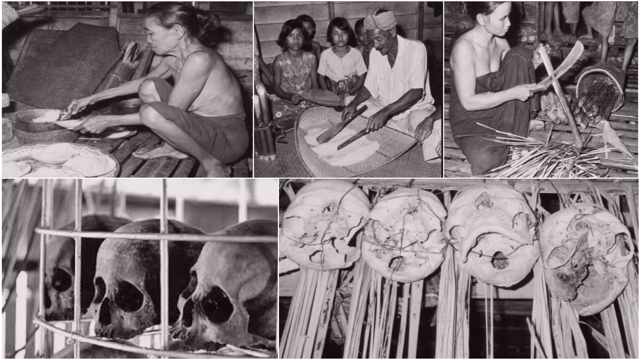
Before Malaysian formation, there were a lot of Bidayuh villages practicing Gawai Baak, as as in the picture below from Kpg Mentu Tapu, Serian. The rituals have a lot of number seven, since Bidayuhs in the past have seven gods (iju tampa), and it includes tuak (rice wine), makko (tobacco), barak ambun (banana), sungkoi tungkus (rice wrapped in leaves), siluang (rasbora fish), pangkang (glutinous rice in bamboo), kunyit numpeh (pounded turmeric) etc.
This gawai rituals could only be performed by tukang matik & nabur, where that person(s) is usually a descendent from Bidayuh’s folk religion priest lineage. When the old-timers embraced Christianity, the lineage is broken and no one knows the ritualistic mantra to appease the “kamangs”, i.e. kings of the netherworld.
Nowadays, at Serian area, there were no news about Gawai Baak since many are Christians.
Many Bidayuh villages handed over their skulls to Sarawak Museum for safe-keeping, such as Kpg Pichin (those skulls were placed at “Balû Damba”) as they embrace Christianity in the 1950 – 60s. The story of early Bidayuh Christians are equally interesting as well.
As for village that still keeps these skulls, such as Annah Rais, Opar & Krokong, they have their own ritual (e.g. Nyobang), led by their respective shaman.
Note: Do add the names of the villages in the comment section.
As we progress, it is important to embrace the modernities but let’s not forget our past, our identity and our culture, regardless of our race. In fact, these unique culture of ours are the one that attracts tourists to go to our country.
Therefore, be proud of your own identity.
Pictures:
Top Pictures: Preparation for Gawai Baak at Kpg Mentu Tapu (30 Aug 1954)
Bottom Left: Skulls at Annah Rais, Padawan
Bottom Right: Skulls at Kpg Opar, Bau
p.s. cirita ti pasal Gawai Baak, indi masu bala kayuh de tundah bala babuk barak kita de sani neh. Mene pan bala kita kai ngundah neh, ngin bala kita ti meret saten, pak aba mah bala kita kambut batan asal kita.


